

Summary
Global macro surprised to the upside, with softer inflation and multiple rate cuts instead of the tightening I expected.
Geopolitics played out as anticipated, but market impact was milder despite renewed US-China trade tensions.
Malaysia defied my expectations, with an OPR cut and a stronger MYR supporting market sentiment.
Sector calls were mixed, as data centres and renewables outperformed while exporters recovered for unexpected reasons.
At the end of 2024, I wrote Navigating 2025 Markets as a way to organize my thoughts across the US, Singapore, Hong Kong, and Malaysia before stepping into another unpredictable year. I didn’t expect to get everything right. I just wanted a framework that made sense at that moment.
Now that 2025 has finally closed, I went back to compare what I believed should happen against what actually unfolded. And honestly, reviewing these predictions felt like reading old journal entries. Some parts I nodded at, others I laughed at.
Here’s a look back at how my 2025 calls aged:
#1:🌎Global Markets
Heading into 2025, I had a clear narrative in my mind. Trump had just won the US election. Tariffs were back at the center of policy conversations. Inflation looked like it might flare again. And with that, I thought below would happen:
The Federal Reserve would slow down rate cuts or even hike if needed
Stronger USD as markets priced in higher-for-longer interest rates.
But the market had other plans.
📉Inflation didn’t return… and the Fed cut rates three times
Instead of tightening, the Fed delivered three rate cuts of 25 bps each, bringing the federal funds range down to 3.5% – 3.75% in:
September 2025
October 2025, and
December 2025
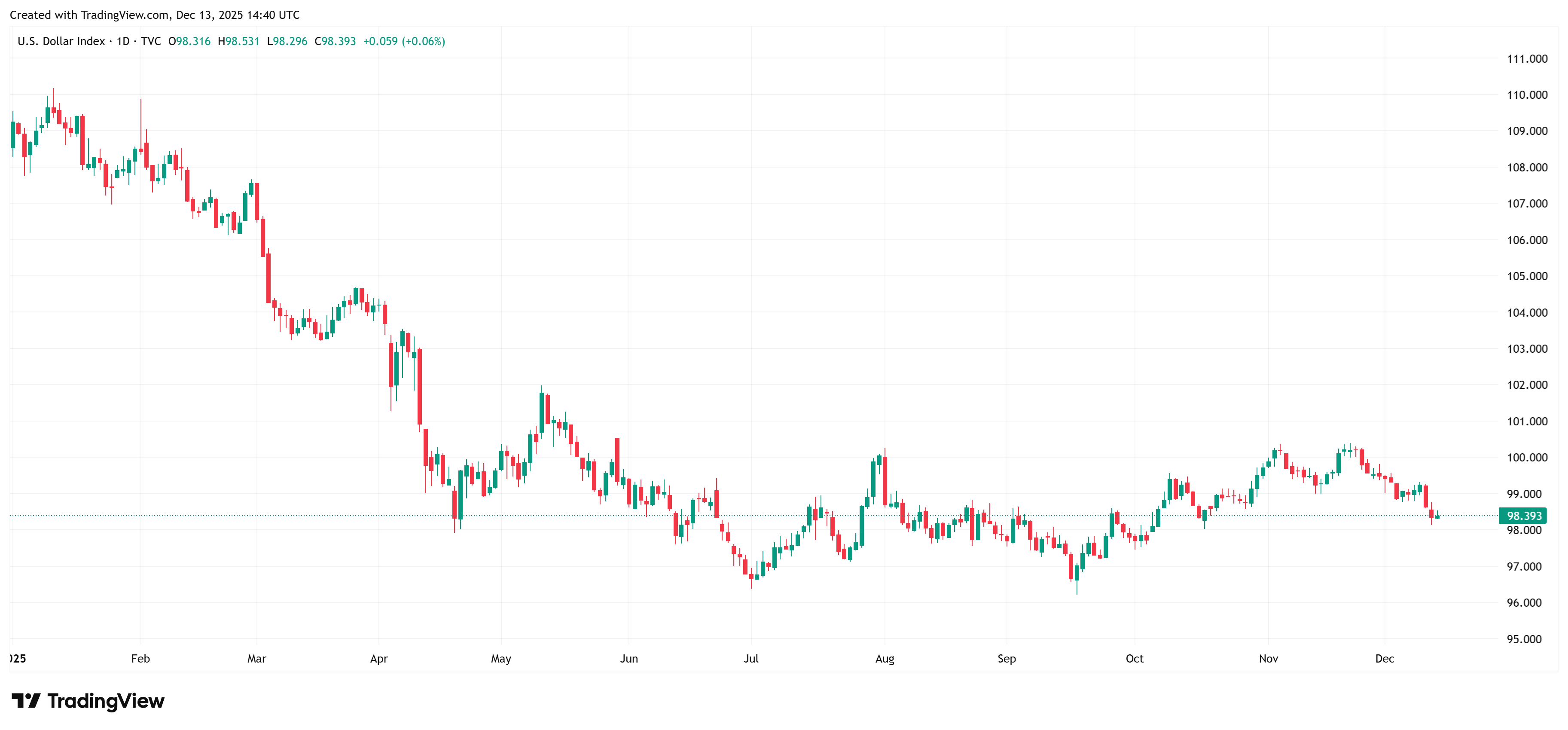
That was the first major curveball that threw my prediction off. The softer inflation trend persisted, the US economy held steady driven by AI narratives, and markets embraced the idea of a soft landing. As a result, the USD weakened, not strengthened – another miss on my part. The USD Index has dropped 10% year-to-date:
Central banks around the world also cut their interest rates:
European central bank cut its interest rates 4 times. Its main refinancing operation rates was cut from 3.15% to 2.15% as of June 2025.
Monetary Authority of Singapore had eased the pace of SGD Nominal Effective Exchange Rate (S$ NEER) appreciation twice earlier in 2025.
China’s PBOC cut its key lending reference rates for its one-year and five-year’s Loan Prime Rates (LPR) once by 0.10% in May 2025.
Hong Kong Monetary Authority cut its base interest rate 3 times in 2025 from 4.75% to 4% as of December 2025
Malaysia’s Bank Negara cut its overnight policy rate (OPR) once in July 2025 from 3% to 2.75%.
In a nutshell, inflation was contained despite Trump’s sweeping tariff threats.
⚔️But on geopolitics… I was spot on
If there was one global theme I expected to intensify, it was the US-China trade war. And this prediction turned out to be accurate.
China retaliated against Trump’s renewed tariff threats with measures that were sharper than I envisioned:
Export controls on rare earth minerals
Adding US firms to its “Unreliable Entities” list and impose export ban
Blocking certain soybean imports through suspended permits
But global markets got a bit of relief later in the year when both sides agreed to a temporary truce.
In hindsight, the global story of 2025 became a mix of humility and confirmation:
Macro? I was too early and too defensive.
Geopolitics? I called it right, but the market impact wasn’t as severe as expected.
#2: Malaysia Market
I expected Bank Negara Malaysia (BNM) to keep OPR at 3.0% throughout 2025, given how conservative they were in past cycles. But in July 2025, BNM surprised the market with a 25 bps cut, lowering OPR to 2.75%.
This aligned Malaysia more closely with global easing trends and provided a sentiment lift to interest-sensitive sectors. Another miss on my end.
💵MYR: I expected it to weaken… it strengthened
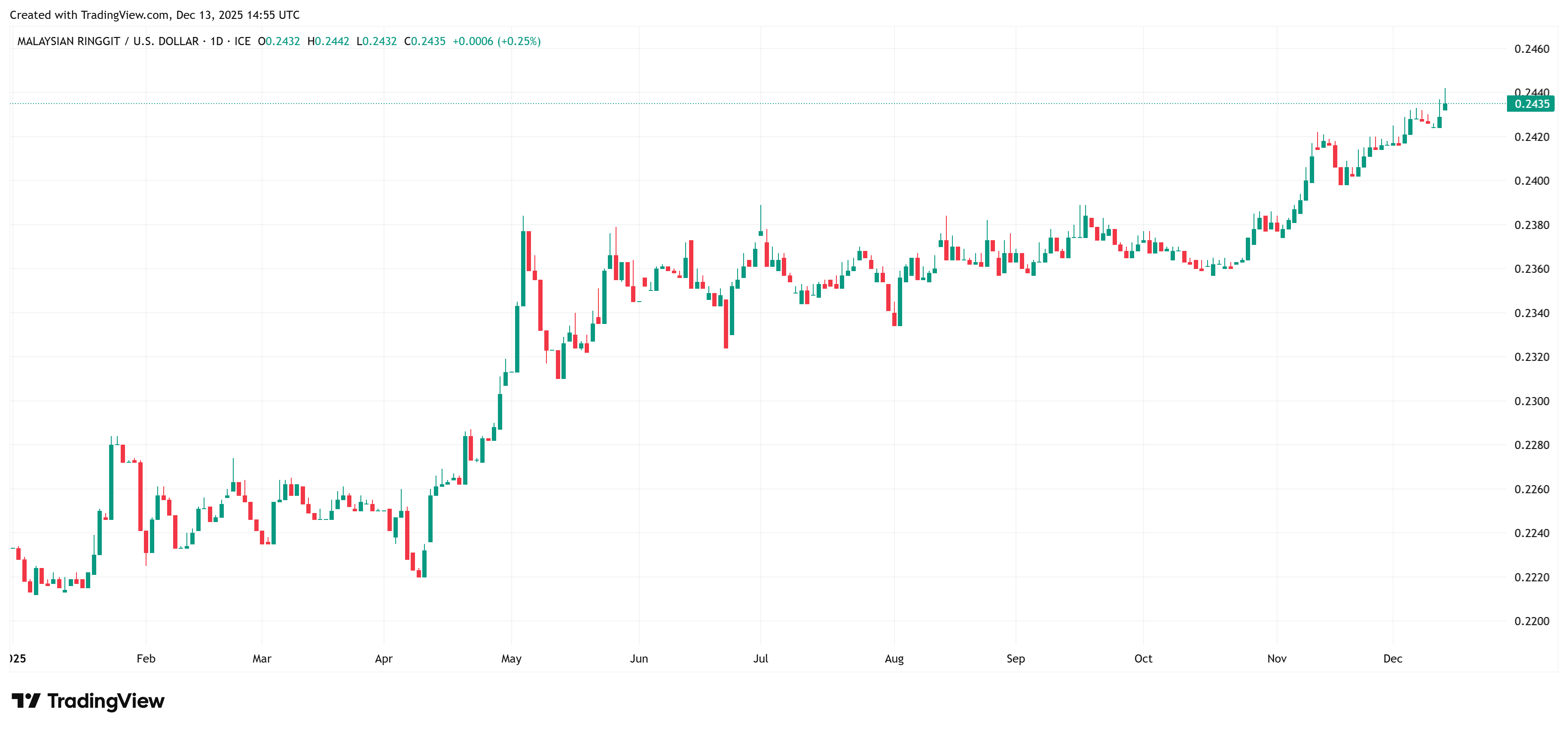
This was my third major surprise of the year. Instead of weakening due to tariff risks and inflationary spillovers, MYR strengthened roughly 9.4% against USD year-to-date.
This stability helped import-heavy businesses and eased the pressure on companies that previously suffered large forex losses. It was the opposite of what I anticipated but a welcome development for the broader market.
#3: Sector Specific Reflections
Some parts of my outlook aged well. Others didn’t. Here’s a narrative version of the year’s sector story:
💾The Data Centre Boom: This one hit the mark
I expected the data centre value chain (e.g. construction, utilities, telco & renewable energy) to stand out in 2025. And this turned out to be correct.
A few notable highlights:
Tenaga saw electricity demand grow 7.7%, with 5.2 percentage points coming from data centres as of 3Q25.
TIME dotCom delivered strong 3Q25 results, backed by higher data revenue and robust demand from AIMS (its 30% associate).
Renewable energy players recorded some of their best earnings in recent years. Examples are Solarvest Holdings Berhad’s Q2 2026 net profit has already surpassed its FY2024 net profit.
The momentum from 2024 clearly carried into 2025 driven by increasing adoption of AI and EV.
📦Export-oriented companies: The reversal I didn’t anticipate
In my original outlook, I expected exporters to recover due to a stronger USD because many of whom suffered heavy forex losses in 2024.
But since USD weakened, the recovery came instead from:
Stabilizing MYR
Improving external demand
Better cost management
The direction was correct, they did recover but the reason was not what I predicted.
Smaller Themes: Compressed but worth noting
Inflation drivers (RON95 subsidy removal, minimum wage, civil service pay hikes, sugary beverage tax) played out, but their impact was more muted than expected.
Dividend-oriented sectors such as retail and industrial REITs remained resilient.
These didn’t materially change the market narrative but shaped the overall texture of 2025.
📌Closing Thoughts
Most of my big predictions were wrong. A few played out as expected. The year 2025 didn’t go the way I thought it would, but it gave me clearer insight into how unpredictable and fascinating markets can be.
I’ll be doing another prediction for 2026. Stay tuned and happy new year!
Disclaimer:
The information provided in this blog post is for informational purposes only and should NOT be construed as financial advice. Investing in stocks and ETFs involves risk, and there is no guarantee of profits. Past performance is not indicative of future results. It is important to conduct thorough research or consult with a qualified financial advisor before making any investment decisions. The author is NOT a financial advisor and is sharing his personal experiences and opinions only.